Clinicians
On this page: Psychotic disorders | Cannabinoid Hyperemesis Syndrome

In a 2025 survey with health care providers practicing in WA state1, more than half expressed strong concern about the mental-health risks of cannabis use, and nearly 20% reported seeing patients with cannabis-related adverse health events two to three times per month.
Four conditions emerged as relatively more common and concerning among respondents:
- Cannabinoid hyperemesis syndrome: 70% of clinicians reported treating patients who endured repeated cycles of severe vomiting and nausea, which can lead to dehydration, repeated emergency department visits and hospitalizations.
- Cannabis-use disorder: 65% of respondents identified patients showing signs of addiction or dependency on cannabis.
- Anxiety: 63% of respondents identified patients with anxiety and panic episodes related to cannabis use.
- Psychoses or hallucinations: 53% of respondents identified patients with psychotic symptoms triggered by cannabis use; 34% called this out as the most serious such adverse event they see.
Survey respondents also expressed the desire to have referral options and clearer clinical guidelines, or pathways, to better serve these patients.
- Carlini BH, Kellum LB, Garrett SB, & Williams JR. (2026). Cannabis-related problems, adverse events, clinical experiences and barriers to intervening: Perspectives of health care providers in Washington State [advance online publication]. Substance Use & Addiction Journal. doi: 10.1177/29767342261426116
Psychotic disorders and cannabis [back to top]
The science behind cannabis use and the development of psychotic disorders
Frequent cannabis use, early age of initiation, and high THC cannabis consumption are important risk factors in the development of lifelong psychotic disorders, such as schizophrenia. Furthermore, individuals who experience an acute episode of cannabis-induced psychosis have a much higher risk of developing lifelong psychotic disorders later in life.
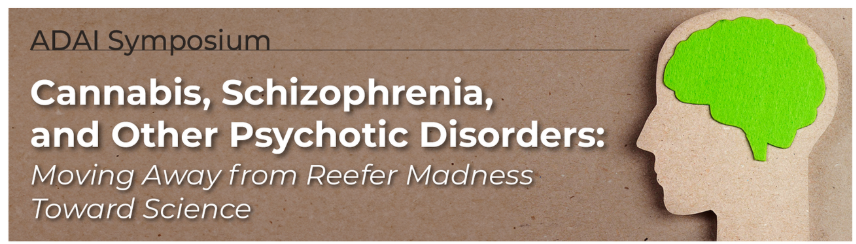
The recordings and slides from our 2024 Symposium present the evidence on this topic, brought together by worldwide experts in the subject.
Training and resources for effective communication about cannabis with clients living with psychotic disorders
For those already diagnosed with schizophrenia, cannabis use often leads to more severe symptoms and worse treatment outcomes.
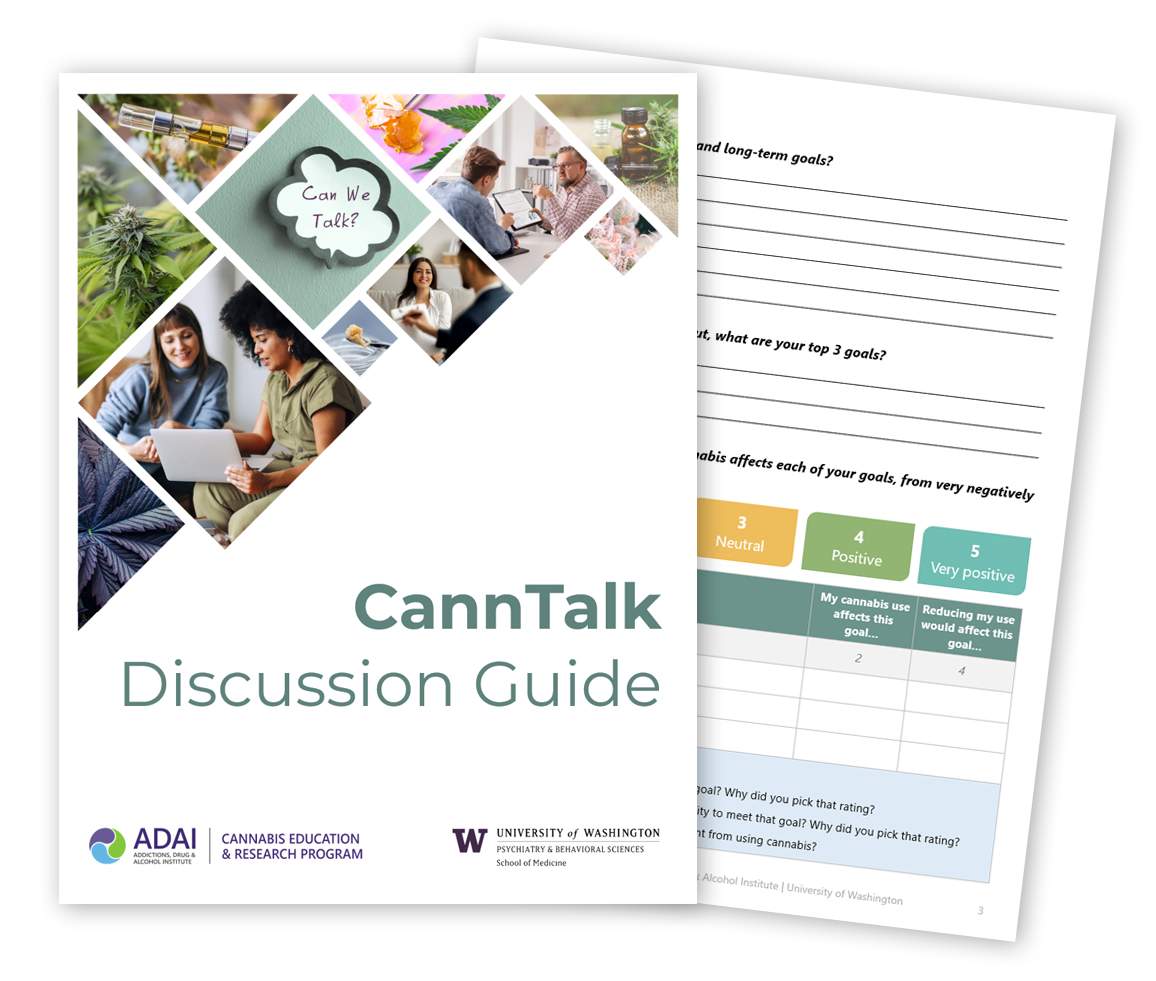
CannTalk was designed to equip Coordinated Specialty Care teams and behavioral health clinicians with skills to communicate more effectively about cannabis and guide clients toward reducing or quitting their cannabis use. CannTalk offers providers an online training and materials to facilitate conversations.
CannTalk resources include:

Cannabinoid Hyperemesis Syndrome [back to top]
2026 ADAI Symposium: The Dose Makes the Poison: Cannabinoid Hyperemesis Syndrome Goes Mainstream
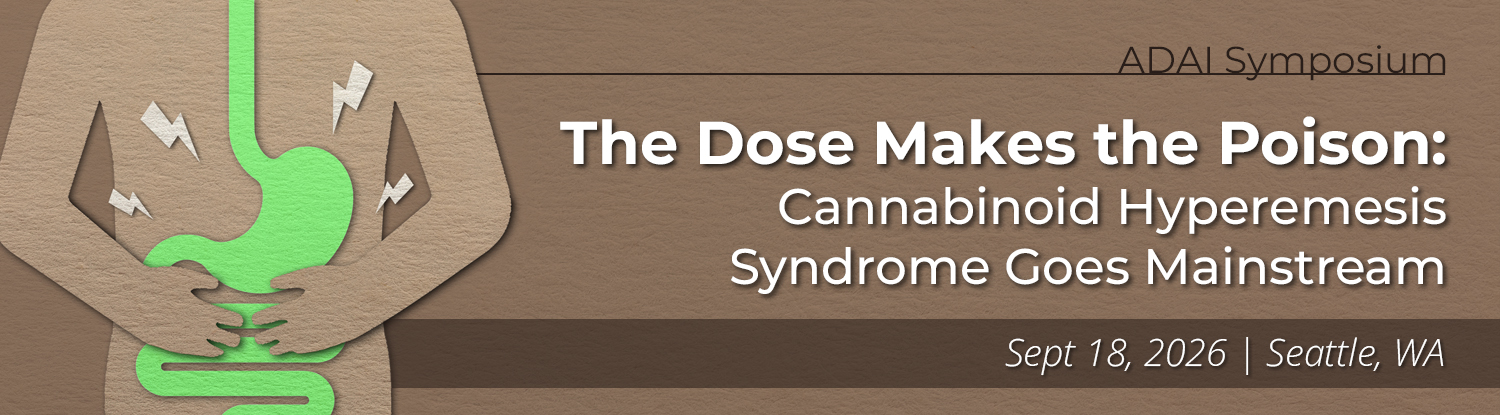
The recordings and slides from the 2026 ADAI Symposium at the University of Washington provide information from national experts on what CHS is, prevalence and trends in Washington State and beyond, patient resistance to diagnosis and treatment, presentation and management of CHS in diverse clinical settings, clinical and policy perspectives, and a research agenda.