Education on Medications for Opioid and Alcohol Use Disorder & Shared Decision-Making Tools
In 2024, the Washington State legislature passed Senate Bill 6228, a law that establishes new standards for substance use disorder treatment.
Those standards include the requirement that behavioral health agencies (BHAs) treating opioid or alcohol use disorder educate patients about all clinically appropriate medication options, including FDA-approved medications, and support patients’ informed medication choices. They also have the option of using shared decision-making tools developed by the UW Addictions, Drug & Alcohol Institute (ADAI) to help meet requirements.
What is shared decision-making and how does it help? [back to top]

Shared decision-making is a collaborative process where clients and clinicians make health decisions together. It combines the best available research with the client’s personal goals, values, and preferences so they can make informed choices that fit their needs.
Studies show that when treatment aligns with someone’s personal preferences and values, they are more likely to have better outcomes, like reduced substance use.
How shared decision-making works
Shared decision-making includes these steps:
- Help clients feel informed and supported throughout the decision-making process.
- Explain that different options will be reviewed together as a team.
- Describe evidence-based treatments and supportive options, including benefits and risks; answer questions; and ensure understanding. Decision aids, like the ADAI tools, can help.
- Explore what matters to the client and how each option fits their personal goals and preferences.
- Make a treatment plan together based on the client’s preferences.
- Follow up to see how the plan is working and make changes if needed.
Why use the ADAI tools? [back to top]
The ADAI tools meet SB 6228 requirements. They also:
- Provide evidence-based, accurate information in plain language.
- Were developed with input from researchers, clinical experts, and people with lived experience.
- Can be used by both clinical and non-clinical BHA staff who educate clients.
- Were developed in partnership with the Washington State Health Care Authority, the Washington State Department of Health, and the American Society of Addiction Medicine (ASAM).
How to access and use the ADAI tools [back to top]
The ADAI shared decision-making tools are designed to give BHAs flexibility in how and when to use them, including at intake, during treatment planning, in ongoing medication discussions, and during discharge planning.
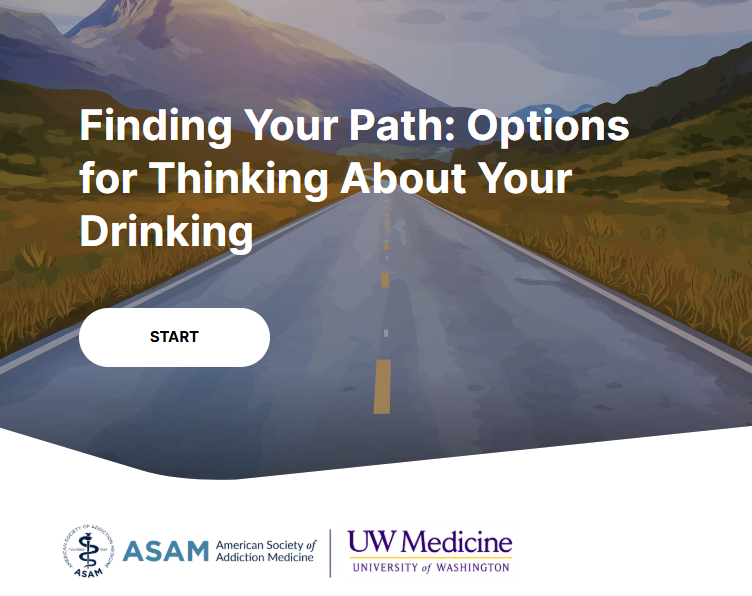

Coming in late 2026!
- Printable medications handout
- Interactive online patient decision aid
Printable medications handout
- Summarizes and compares evidence-based medication options.
- Can be reviewed with clients to support conversations about medications and connect them with the next steps in care.
- Includes a client and clinician signature page to support documentation of client receipt of education on medications and interest in medications.
Interactive online decision aid
- A mobile-friendly tool that helps clients compare treatment and other supportive options.
- Supports conversations about personal needs and preferences.
- Can be used by trained non-clinical staff to help clients understand their options and connect them with next steps in care.
What training and technical assistance will be offered? [back to top]
ADAI will offer free training, including:
- Live online training
- In-person training
- Self-paced online modules
Participants will receive a Certificate of Completion which can be used to document participation in continuing professional development activities.
Information on upcoming training opportunities will be posted on this page soon!

How does billing and coding work for these tools? [back to top]
Using shared decision-making tools is not considered a separate billable Medicaid service.
The inclusion of these tools and the time it takes to administer them can be billed as part of substance use disorder (SUD):
- Brief intervention
- Assessment services
- On-going treatment, including individual therapy sessions
Have questions or feedback? [back to top]
If you have questions, need support or technical assistance after completing a training, or would like to share feedback, contact: SharedDecisionMaking@uw.edu.