October 16, 2024
ADAI Lunch & Learn Webinar: A Socio-Ecological Approach to Deriving Insights about Stigma Relating to Substance Use (Nov. 14, 12pm PT)

Presenter:Annie Chen, PhDAssociate ProfessorUW Department of Biomedical Informatics and Health Education Stigma relating to substance use disorder can have negative impacts in many aspects of those affected, including but not limited to physical and mental health, employment, housing, social relationships, and reluctance to seek treatment. Despite these consequences, questions remain concerning how stigma occurs, the…
September 9, 2024
New Resource: Health Engagement Programs Resource Kit
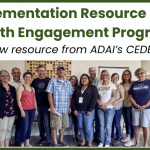
Health engagement programs are a newer model of care for people who use drugs. The model featured in this resource kit, developed by the ADAI Center for Community-Engaged Drug Education, Epidemiology & Research (CEDEER), uses a care team or “health support team” of a prescriber, nurse care manager, care navigator, and a mental health coordinator, all working…
August 16, 2024
Protected: ADAI Staff Handbook
There is no excerpt because this is a protected post.
June 17, 2024
Third Space Toolkit: New Resource from ADAI’s CAAHS Supporting Telehealth for Substance Use Disorders
ADAI’s Center for Advancing Addiction Health Services (CAAHS), working with the Idaho Department of Health and Welfare, recently developed an interactive online toolkit, the Third Space Toolkit: Building Space for Telehealth in Libraries and the Community, to support the addition of “privacy pods” in Idaho public libraries for the purpose of providing private spaces for…
Congratulations to Our ADAI Spring Small Grants Awardees!

What are ADAI Small Grants? ADAI works to stimulate and facilitate UW research on alcohol and drug use and addiction through its Small Grants Program, which awards funds to UW researchers for pilot studies and developmental research. The scope ranges from pharmacology of drugs to studies of clinical treatment strategies, prevention, and social policy issues….
June 11, 2024
New ADAI Publications on Cannabis and Opioid Policy

Several ADAI researchers have some new publications out recently related to cannabis and opioid policy: State Requirements for Non-Medical Cannabis “Budtenders” Beatriz Carlini, PhD, MPH, Research Associate Professor and Director of ADAI’s Cannabis Education & Research Program, is coauthor of a new paper on State requirements for non-medical US cannabis retail personnel (LoParco C, et…
May 29, 2024
2024 ADAI WA State Legislative Wrap-Up
During the 2024 state legislative session, two bills passed the Washington State Legislature and were signed by the Governor that involved ADAI. Following is a summary of the two bills. 2SHB 2320: An act relating to reducing the public health harms associated with high THC cannabis products ADAI’s Cannabis Education and Research Program’s (CERP) research…
May 2, 2024
Health Engagement Programs
The Health Engagement Program Model Health engagement program is a broad term for a range of models providing low-barrier substance use treatment, harm reduction, and basic medical services for people who use drugs (primarily opioids and stimulants). This includes low-barrier buprenorphine programs at harm reduction programs, “drug user health hubs,” WA State’s Health Engagement Hub…
April 22, 2024
Results from the 2023 WA State Syringe Services Program Health Survey
Involving people who use drugs in meaningful ways to design and deliver the services offered to them is important. People who use drugs have clear preferences, insights, and innovative ideas for service models and are eager to share their perspectives when given genuine opportunities for input and involvement. To capture some of that vital information,…
April 19, 2024
Results from the 2023 WA State Syringe Services Program Health Survey
Susan Kingston; Alison Newman, MPH; Caleb Banta-Green, PhD, MPH, MSW; Sara Glick, PhD, MPH Download PDF of this report | Watch the webinar | Download the one-page summary Key Findings Syringe Services Programs in WA State There are nearly 40 SSPs operating in urban, suburban, rural, and tribal areas across 30 counties in WA State….
« Previous Page Next Page »