Publications
October 7, 2026
New & Updated Videos for Care Navigators & Nurse Care Managers

New videos are now available on the LearnAboutTreatment.org website for Care Navigators, Nurse Care Managers, and other professionals supporting people with opioid use disorder. Our UW ADAI State Opioid Response (SOR) Training Team developed these videos to provide practical information and strategies to support patient care. NEW Topics for Care Navigators: NEW & UPDATED Topics…
October 5, 2026
What’s the Scoop on Bupe? New Handouts for Teens, Young Adults, and Their Caregivers
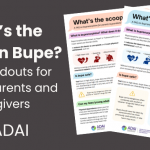
Teens and young adults with opioid use disorder (OUD) can and do benefit from buprenorphine (aka “bupe”), a treatment medication for OUD. These two new handouts help teens and young adults, and their parent and caregivers learn more about this treatment option. The handouts answer key questions, such as: Handout for teens/YA | Handout for…
June 17, 2026
CEDEER Handout: Cutting Back on Stimulants with Contingency Management
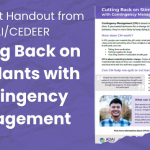
Contingency management (CM) is an evidence-based intervention that can help people quit or cut back on stimulants, including methamphetamine and cocaine. This one-page handout was created by the ADAI Center for Community-Engaged Drug Education, Epidemiology & Research (CEDEER) to help educate patients or clients about this treatment option. The handout includes information on: More information…
June 15, 2026
New ADAI Report Explores Smoking Supply Use and Impacts in Washington State
From 2015 to 2025, Washington State saw a dramatic shift in opioid and stimulant use, with smoking replacing injecting as the primary route of administration among syringe services program clients. More than half of syringe services programs in the state now offer safer smoking supplies. Safer Smoking Supplies – Use, Engagement, and Association with Decreasing…
June 9, 2026
New ADAI Report: Syringe Services Program Participants’ Perceptions, Concerns, and Experiences of Medications for Opioid Use Disorder (MOUD)
Medications like methadone and buprenorphine can be a powerful tool for people with opioid use disorder, but access and experiences vary. This new ADAI report, written by Teresa Winstead, PhD, MA, and Alison Newman, MPH (both of the Center for Community-Engaged Drug Education, Epidemiology & Research) shares what 18 syringe services program participants said about…
April 16, 2026
RECORDING AVAILABLE: Results from the 2025 WA State Syringe Services Program Health Survey – Report and Webinar
The WA State Syringe Services Program Health Survey is conducted every other year by CEDEER at UW ADAI in partnership with Public Health-Seattle & King County, the Washington State Department of Health, and syringe services programs (SSPs) across the state. The surveys asks participants about their substance use, health behaviors, and health care and substance use treatment needs….
March 30, 2026
New ADAI Research: Cannabis-Related Problems, Adverse Events, Clinical Experiences, and Barriers to Intervening for Health Care Providers in WA State
Citation: Carlini BH, Kellum LB, Garrett SB, Williams JR. Cannabis-related problems, adverse events, clinical experiences and barriers to intervening: Perspectives of health care providers in Washington State. Substance Use & Addiction 2026 (in press). doi: 10.1177/29767342261426116 This new paper from ADAI’s Cannabis Education & Research Program (CERP) team (CERP Director Beatriz Carlini and Lyndsey Kellum,…
March 11, 2026
New from ADAI: Fentanyl, Meth Use Impact Behavior in Rats; Psychedelic Treatment Reverses Social Deficits
Drug overdose deaths in the United States have skyrocketed over the last 20 years, and an increasing number of those deaths now involve people using multiple substances, particularly opioids and stimulants. Despite how common this combination has become, most research has looked at these substances separately, leaving a major gap in our understanding of what…
February 27, 2026
New ADAI Report: Evaluation of Seattle City Ordinance 126896 (Possession and Use of Controlled Substances in Public Spaces)

In late 2023, the City of Seattle passed Ordinance 126896, a law intended to reduce jail bookings for public drug use and possession by encouraging police to divert people to services instead of the criminal legal system. Researchers from the University of Washington’s Addictions, Drug & Alcohol Institute, led by Assistant Professor Mandy Owens, PhD,…
January 27, 2026
ADAI in the News: People with Psychotic Disorders Link Cannabis Use to Physical Ills (UW Medicine News & KUOW)

People who have psychotic disorders, such as schizophrenia, and who also use cannabis report experiencing a wider range of health problems than previously documented. In a study recently described in a paper in Community Mental Health Journal, ADAI Research Associate Professor Beatriz Carlini, PhD, MPH, and colleagues analyzed survey responses from 4,144 Washington State cannabis…
Next page