ADAI Lunch & Learn Webinar Series
ADAI hosts a monthly webinar series that runs through Fall-Spring quarters and aims to highlight the work of a wide range of research in the field of substance use, with a special focus on presentations from early career scientists and recipients of our ADAI Small Grants.
2025-2026 Schedule
Click the titles below to register for upcoming sessions or view recordings from past sessions.
October | November | January | February | March | April | May | June
October 30, 2025

Access Granted: Making Docs, Data, and Design Work for Everyone (view recording)
Meg Brunner, MLIS, and Erinn McGraw, BFA, UW ADAI
Join the ADAI Information Services Team to learn about:
- What digital accessibility is and why it matters
- Requirements for digital accessibility at the UW (and beyond!)
- Simple, practical steps to make your text, graphics, presentation slides, data, or multimedia accessible online
- Best practices overall for creating digital content for different audiences
November 2025

Quantification and prediction of human fetal THC exposure during pregnancy to inform fetal cannabis toxicity (view recording)
Jashvant (Jash) D. Unadkat, PhD , Professor, UW Dept. of Pharmaceuticals
Prenatal cannabis use is associated with neurodevelopmental deficits, likely due to exposure to the psychoactive cannabinoid, (-)-Δ9-tetrahydrocannabinol (THC), and its in vivo active metabolite, (±)-11-OH-Δ9-tetrahydrocannabinol (11-OH-THC). A first step in determining causality is to quantify fetal exposure to these cannabinoids. This is a challenge as single umbilical venous plasma cannabinoid concentration, relative to the corresponding maternal plasma concentration, at term does not reflect fetal exposure to the cannabinoids. In contrast, such exposure, at term and earlier in gestation, can be predicted by a verified maternal-fetal physiologically based pharmacokinetic model. This presentation will show development and verification of such a model that allows prediction of fetal exposure to THC and 11-OH-THC, throughout pregnancy, for various doses and frequency of cannabis consumption, orally or by inhalation. Such predictions can guide future preclinical studies to inform risks associated with prenatal cannabis use.
January 29, 2026

Of Mice and Misuse: Preclinical Modeling of Fentanyl Use Disorder (view recording)
Kevin Coffey, PhD, Research Assistant Professor, UW
In this session, Dr. Coffey discussed his recently funded ADAI pilot small grant, which aims to explore the use of the GLP-1R agonist dulaglutide for treatment of fentanyl use disorder in his rodent models.
February 26, 2026

Update on Neuromodulation Techniques and Applications (no recording available)
Randall Espinoza, MD, MPH, Professor of Psychiatry & Behavioral Sciences, Garvey Endowed Professor of Brain Health and technology, Medical Director of the Garvey Institute Center for Neuromodulation
This talk will cover current FDA-approved neuromodulation devices and describe indications and considerations in treatment selection.
March 26, 2026
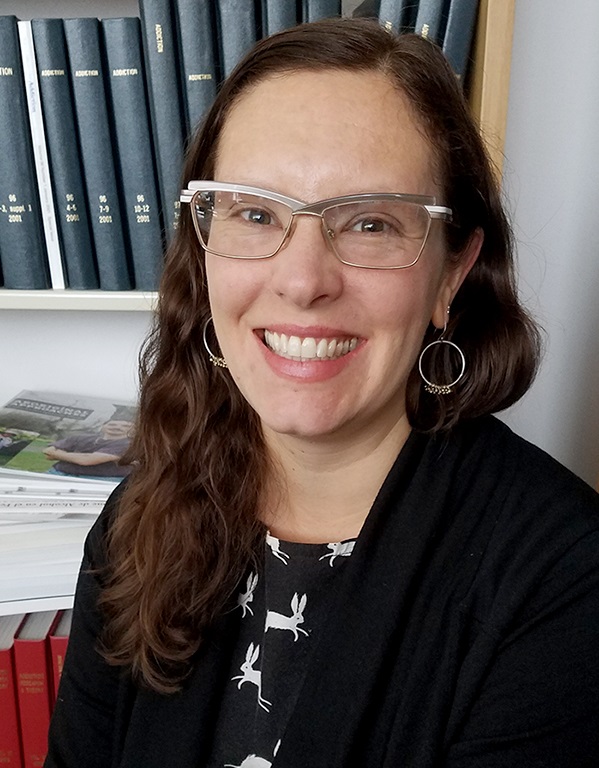
Results from the 2025 Washington State Syringe Services Program Health Survey (no recording available)
Alison Newman, MPH, Program Operations Specialist, UW ADAI
The WA State Syringe Services Program (SSP) Health Survey is conducted every two years among participants of SSPs to learn about their substance use patterns, health behaviors, service use, and health care needs. The survey is coordinated by the Center for Community-Engaged Drug Education, Epidemiology & Research (CEDEER) at the University of Washington’s Addictions, Drug & Alcohol Institute (ADAI), in collaboration with Public Health-Seattle & King County (PHSKC) and with support from the WWA State Department of Health (DOH).
In 2025 we had over 1,700 participants from 24 programs across Washington State. In this Lunch & Learn we will cover survey results including:
- A brief history of our programmatic and data collection work with these organizations
- Drug use patterns and whether people smoked or injected
- Experiences with healthcare, harm reduction, incarceration, and SUD treatment
- What care and services SSP participants want
- Examples of how sites around the state use these data
April 30, 2026

Motivated Cannabis Compliance: Using Retail Incentives to Sell Safety (view recording)
Sarah Okey, PhD, Research Psychologist & Research Program Manager
Washington State Liquor and Cannabis Board (LCB)
This presentation will showcase how the retail point-of-sale is one of the most critical interventions for consumer safety; Over 90% of adults who buy cannabis at Washington retail stores ask staff questions about what products to purchase! Drawing from recently published findings, novel analyses, and emerging nationwide collaborations, this presentation will discuss how various motivations within retail can and do align with public health and safety goals.
May 28, 2026

Executive Function and Communication in Early Adulthood in the Context of FASD: Family Perspectives (view recording)
Sara Kover, PhD, UW Department of Speech and Hearing Sciences
This presentation will explore preliminary findings from a project designed to understand the values and experiences of individuals with FASD and their families during a critical time period in life – the transition from schooling to adulthood. Through survey responses and semi-structured individual interviews, family members of adults with FASD shared their perspectives on two intertwined domains: executive function and communication. Insights will be presented regarding the nature of executive function and communication strengths and challenges, values and priorities in the family unit and in other settings (e.g., vocational), and desired services. By centering lived experience, this research seeks to inform future person- and family-centered supports for individuals with FASD and their families.
June 26, 2026

Increasing Resilience from Alcohol Harm: Understanding Pathways to Gender-Affirming and Inclusive Alcohol Healthcare (register)
Jessica Canning, PhD, Postdoctoral Scholar-Fellow, CSHRB & Seven Directions: A Center for Indigenous Public Health
Transgender and nonbinary adults are disproportionately impacted by harm from alcohol use, and these disparities are compounded for trans people of color. Leveraging community strengths in alcohol healthcare and research has shown strong results for improving quality of care for underrepresented communities. Project BRIGHT is a community engaged project to identify improvements in alcohol screening, brief interventions, and treatment referrals for transgender and nonbinary individuals including the unique intersectional experiences across race and culture.
This presentation will review results from interviews with diverse transgender and nonbinary adults in WA, including their healthcare experiences around alcohol, suggested improvements to care, and the largest priorities according to the community. Additionally, we will review the next steps for Project BRIGHT developed in collaboration with our community advisory board to address community priorities.